Table of Contents
1. Introduction: The Summer Cultivation Paradigm Shift
As the summer solstice approaches, the global horticulture community splits into two distinct factions: those who battle the elements, and those who manipulate them. To the uninitiated, a plant is a plant, and summer—with its abundance of light—should be the easiest time to grow. However, seasoned cultivators know that summer is often the most treacherous season of the year.
The behavioral differences between an Indoor Grower (utilizing Controlled Environment Agriculture, or CEA) and a Non-Indoor Grower (Outdoor or Greenhouse) during the summer are not based on personal preferences; they are dictated by biological laws, thermodynamics, and economic efficiency.
While the outdoor grower embraces the sun but fears its scorching heat, the indoor grower fears the rising ambient temperatures that threaten to turn a sealed grow room into a thermal trap. To understand the summer behavioral shift, we must look beyond basic gardening tips and examine the hard empirical evidence governing modern botany.
2. The Physics of Photons and Heat: BTU Management vs. Solar Radiance
The most immediate difference between indoor and outdoor summer cultivation lies in the management of thermal energy. Heat is energy, and plants can only utilize a specific bandwidth of it before their biological machinery begins to break down.
Indoor growers do not have the luxury of natural airflow. Every light fixture, dehumidifier, and circulation fan generates heat, measured in British Thermal Units (BTUs). In the summer, ambient outdoor temperatures make it incredibly difficult for indoor air conditioning (AC) systems to reject heat.
The Behavioral Shift: Commercial indoor facilities shift their photoperiod schedules to run lights exclusively at night—typically from 8:00 PM to 8:00 AM.
The Empirical Evidence: Energy audits in commercial cannabis and vertical farming facilities reveal that running high-intensity lighting during the day in July or August can spike cooling costs by 30% to 50%. By "flipping the clock," growers take advantage of two things: cooler night-time ambient temperatures and "off-peak" electricity rates offered by utility companies.
The Technology Factor: Progressive indoor growers use the summer as a catalyst to upgrade from High-Pressure Sodium (HPS) to high-efficiency LED systems, such as those engineered by Photonican. HPS lights emit roughly 70% of their energy as radiant heat (infrared), which directly bakes the plant canopy. Modern LEDs convert more electricity into usable Photosynthetically Active Radiation (PAR) rather than heat, drastically reducing the cooling load on HVAC systems.
Conversely, outdoor growers have more light than they know what to do with. During peak summer, direct solar radiation can exceed 2,000 µmol/m²/s of PPFD. For context, most C3 plants (including tomatoes and cannabis) reach light saturation between 1,000 and 1,500 µmol/m²/s. Anything beyond that causes photo-inhibition and cellular damage.
The Behavioral Shift: Non-indoor growers deploy shade cloths (ranging from 30% to 50% density) and apply heavy organic mulch to the topsoil.
The Empirical Evidence: Soil temperature studies indicate that direct summer sunlight on black plastic nursery pots can raise the root-zone temperature to over 45°C (113°F). At this temperature, dissolved oxygen in the root zone plummets, roots suffocate, and pathogens like Pythium (root rot) run rampant. Mulching and shading drop the soil temperature by as much as 10°C, preserving root health.
3. The Microclimate Battle: Vapor Pressure Deficit (VPD) and Stomatal Conductance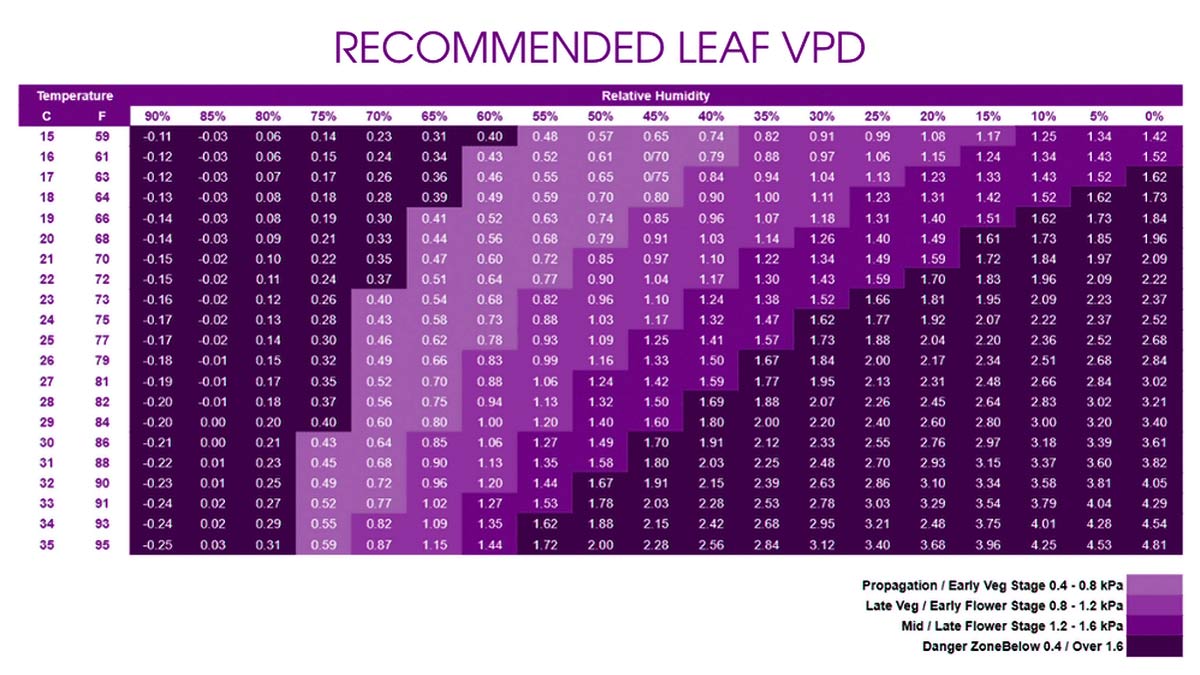
In plant physiology, Vapor Pressure Deficit (VPD) is the difference between the amount of moisture in the air and how much moisture the air can hold when it is saturated. It dictates how fast a plant "sweats" (transpires). If the VPD is too high, the plant dries out. If it is too low, the plant cannot pull nutrients from its roots.
When plants transpire to cool themselves, they release massive amounts of water vapor into the air. In a sealed indoor room, this causes humidity to skyrocket.
The Behavioral Shift: Indoor growers run massive commercial dehumidifiers to maintain a steady VPD (usually between 1.2 and 1.5 kPa for flowering plants). Furthermore, if the temperature in the room creeps up to 30°C because the AC is struggling, indoor growers pump Carbon Dioxide CO2 up to 1,200 to 1,500 ppm.
The Empirical Evidence: According to studies published in Environmental and Experimental Botany, elevated CO2 allows plants to keep their stomata (leaf pores) partially closed to conserve water while still maintaining a high rate of photosynthesis. Without CO2 supplementation, indoor plants in a hot room stall out, wasting electricity and light.
Outdoor growers cannot control humidity. If a summer heatwave is accompanied by high humidity, the outdoor grower’s plants are at severe risk of bud rot (Botrytis).
The Behavioral Shift: Outdoor and greenhouse growers increase airflow using high-velocity horizontal airflow (HAF) fans and adjust their watering schedules to the early morning.
The Empirical Evidence: Watering late in the evening during a humid summer night leaves sitting water on the leaves, creating the perfect breeding ground for fungal spores. By watering early in the morning, the rising sun evaporates surface moisture, lowering fungal infection rates by over 60%.
4. The Biological Explosion: Pest Lifecycle Acceleration and Biosecurity
Warm weather is the ultimate catalyst for insect reproduction. In the summer, pest pressures transition from a minor nuisance to an existential threat.
For the indoor grower, summer means the external environment is teeming with microscopic threats. Thrips, spider mites, and aphids are riding the wind currents, just waiting to find a way inside.
The Behavioral Shift: Indoor growers implement strict quarantine protocols. This includes mandatory shoe changes, donning hairnets/suits before entering the grow space, and installing MERV-13 or HEPA filters on all fresh-air intake vents.
The Empirical Evidence: Entomological research shows that the lifecycle of the Two-Spotted Spider Mite (Tetranychus urticae) is heavily temperature-dependent. At 15°C (59°F), it takes a spider mite egg about 21 days to hatch and reach reproductive maturity. At 27°C (80.6°F), that same lifecycle is compressed into just 5 to 7 days. A single hitchhiking mite on an indoor grower's shirt in July can result in a catastrophic infestation within two weeks. Indoor growers act proactively because reactive pest control in a sealed room is incredibly difficult.
Outdoor growers cannot filter the open air. Their summer behavior revolves around ecological balance rather than total exclusion.
The Behavioral Shift: Non-indoor growers release beneficial predatory insects (like ladybugs, lacewings, and Phytoseiulus persimilis mites) and utilize organic foliar sprays like Neem oil or Bacillus thuringiensis (BT).
The Empirical Evidence: Chemical pesticides applied to outdoor crops in direct summer sunlight can cause phytotoxicity—permanent chemical burns on the leaves. Therefore, outdoor summer growers rely on biology rather than chemistry to keep pest populations below the economic damage threshold.
5. The Nutritional Paradox: Metabolic Acceleration under Heat Stress
As temperatures rise, a plant’s metabolic rate speeds up—up to a certain point. Just like humans, plants need a different diet when they are sweating heavily.
Indoor plants under intense LED lighting in a warm summer room drink massive amounts of water to stay cool.
The Behavioral Shift: Indoor growers lower the concentration of their fertilizer (measured in EC or PPM) during the summer.
The Empirical Evidence: If a plant is drinking 20% more water due to heat, and the grower keeps the nutrient concentration the same, the plant will absorb too many mineral salts. This leads to nutrient lockout and nutrient burn (yellow, crispy leaf tips). By lowering the EC and giving the plant "weaker" food, the plant gets the hydration it needs without the salt toxicity.
Outdoor growers, particularly those using living soil, rely on a massive volume of earth to buffer temperature and nutrient swings.
The Behavioral Shift: Outdoor growers apply top-dressings of dry organic amendments (like kelp meal, bone meal, and worm castings) and inoculate the soil with mycorrhizal fungi and compost teas.
The Empirical Evidence: Beneficial microbes thrive in warm, moist soils. They accelerate the breakdown of organic matter, providing a steady, slow-release stream of nutrients to the plant. This natural buffering prevents the sudden nutrient spikes that plague hydroponic indoor systems during summer heatwaves.
6. Economics and Sustainability: The True Cost of Summer Growing
Ultimately, commercial cultivation is a business, and summer alters the balance sheet drastically for both indoor and outdoor operations.
For indoor growers, summer is the ultimate test of operational efficiency.
Labor Inflation: Harvesting and processing in a hot warehouse takes a toll on human labor.
Consumable Wear and Tear: AC units and dehumidifiers run 24/7, leading to mechanical failures.
The Proven Evidence: Facilities that fail to track their summer coefficient of performance (COP) often find that while their yields remain high, their profit margins evaporate due to electrical overhead. Cultivators who run energy-efficient equipment (like modern LED spectrums and inverter ACs) survive the summer downturn, while legacy HPS facilities are often forced to shut down operations during July and August to avoid bankruptcy.
For outdoor growers, summer is where the bulk of the annual yield is generated, but it requires heavy resource expenditure.
Water Scarcity: Water rights and usage become paramount.
Crop Loss: Unexpected hail, summer thunderstorms, or wildfires (smoke taint) can ruin a whole year’s work in a single afternoon.
The Proven Evidence: Outdoor operations spend the summer investing in automated drip irrigation and rainwater catchment systems. In drought-prone regions, water usage tracking is not just an environmental preference; it is a legal requirement.
Summer cultivation highlights the fundamental philosophical difference between indoor and outdoor horticulture.
Indoor growers act as Engineers and Biostatisticians. Their summer behavior is defined by precision, containment, and defensive strategy against external heat and biological acceleration. They invest in high-efficiency LEDs, shift light cycles to the cool of the night, and run hermetically sealed rooms to maintain perfect VPD and CO2 levels.
Outdoor growers act as Ecologists and Stewards. Their summer behavior is defined by adaptation, cooperation with nature, and protection against excess. They deploy shade cloths, mulch the earth to protect precious root zones, and recruit beneficial insect armies to fight off the summer pest boom.
There is no "better" way to grow in the summer. Both methods offer unique advantages, provided the grower understands the hard empirical evidence behind their choices. Whether you are an indoor technician upgrading to efficient Photonican lighting to dump heat, or an outdoor purist building a living-soil canopy, success in the summer boils down to one simple rule: work with the plant’s biology, not against it.
Contact Photonican Team for more LED grow light consultation!